
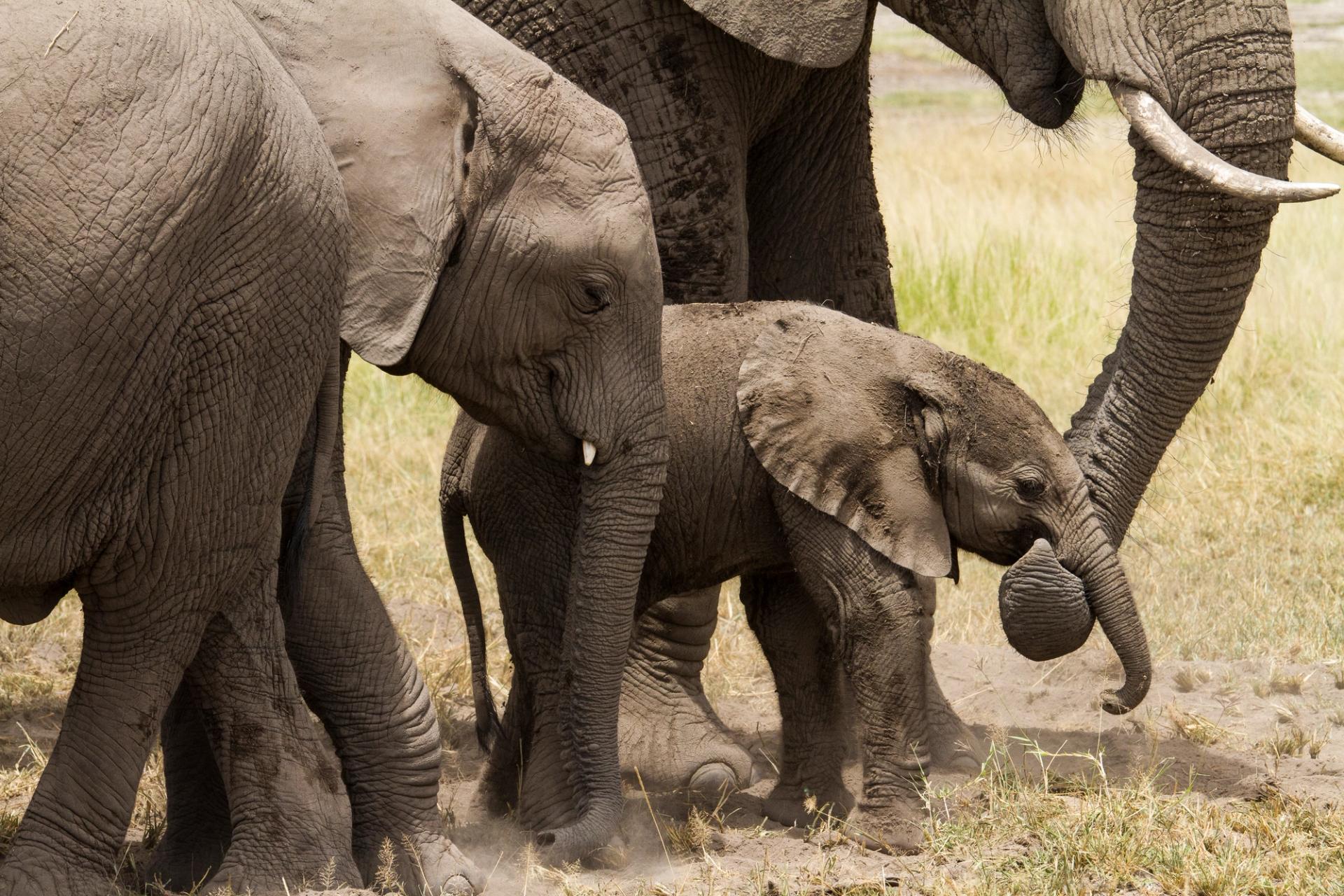
Touch is central to a functioning elephant society. Elephants are highly tactile animals who purposefully touch one another using their trunk, ears, tusks, feet, tail, and even their whole bodies. Through touch, elephants strengthen bonds, build alliances, coordinate group movements, care for calves, defend family members, resolve conflicts, engage in courtship and maintain cohesion within their social network.
Their tactile system — supported by dense mechanoreceptors, vibrissae (long, stiff tactile hairs), and vibration-sensitive corpuscles — allows both delicate close-range communication and detection of distant seismic cues.
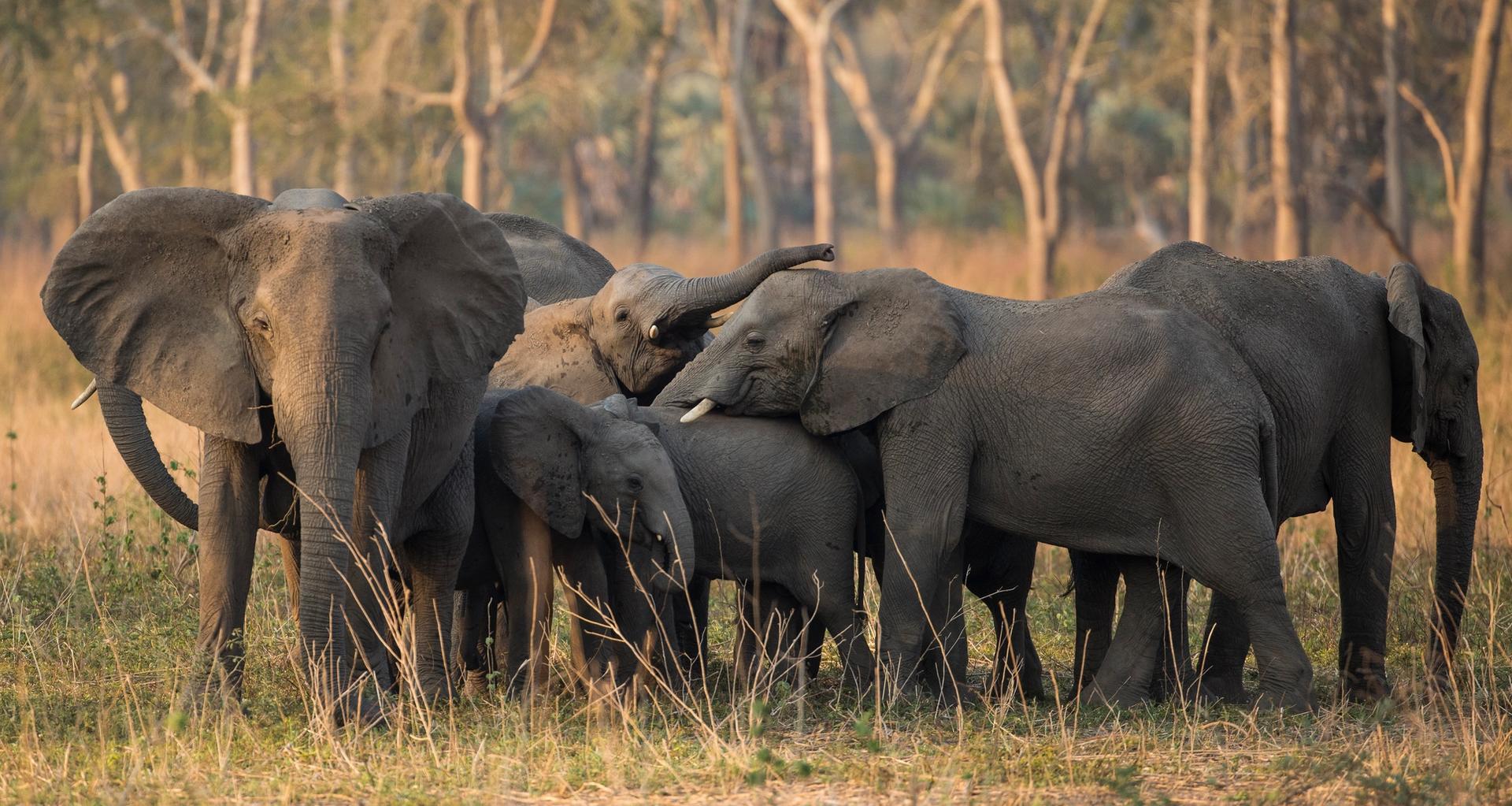
The meaning of a touch depends on the context, the relationship between the individuals, and the manner in which contact is made. Tusks, for example, may be used to poke another aggressively or in play, to gently lift a calf from a mud wallow, or to express solidarity.
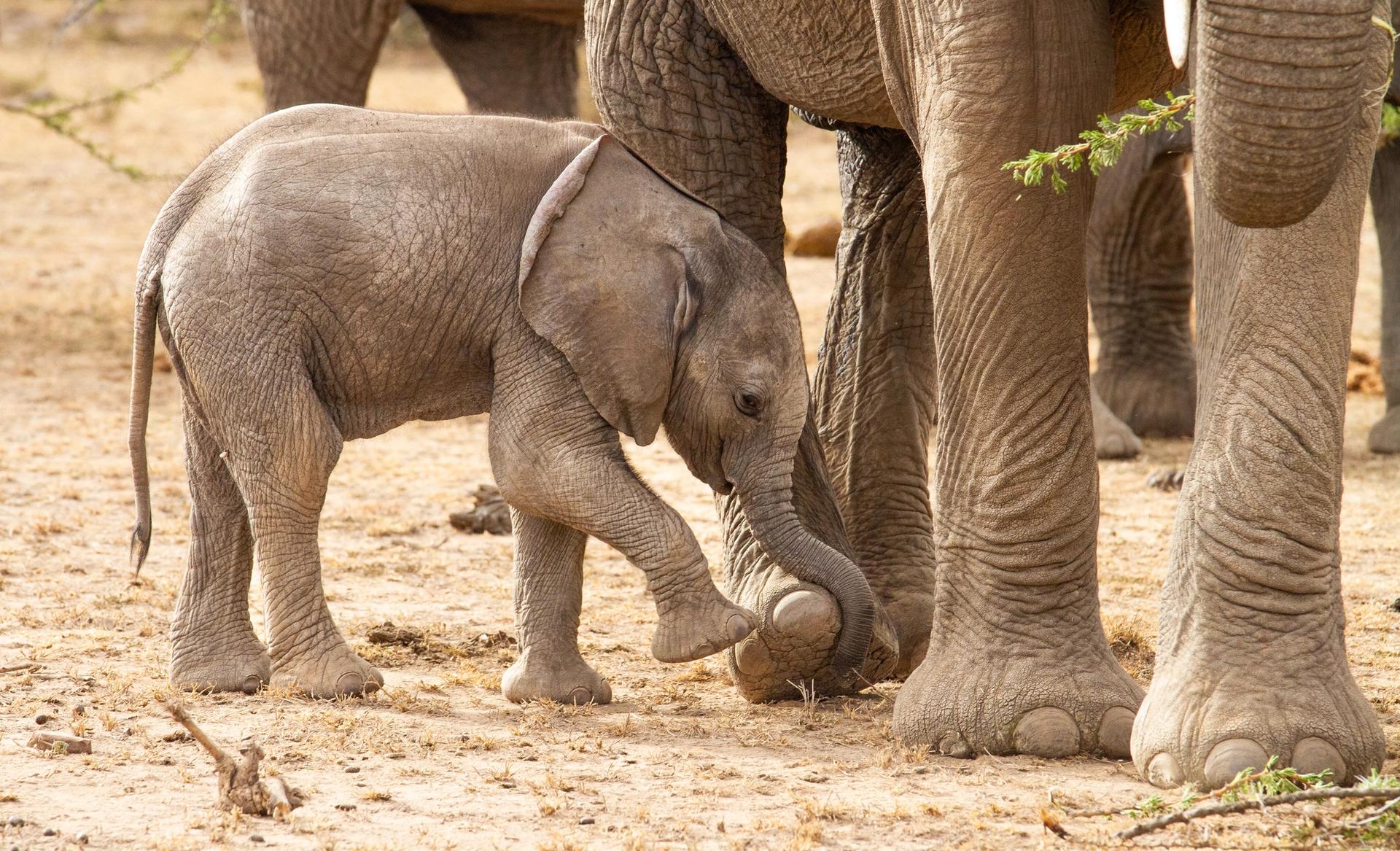
A foot may be used to Kick-Back at another in play or to gently investigate a carcass. Tails can deliver a forceful swat, or lightly check for the presence of a calf walking behind.
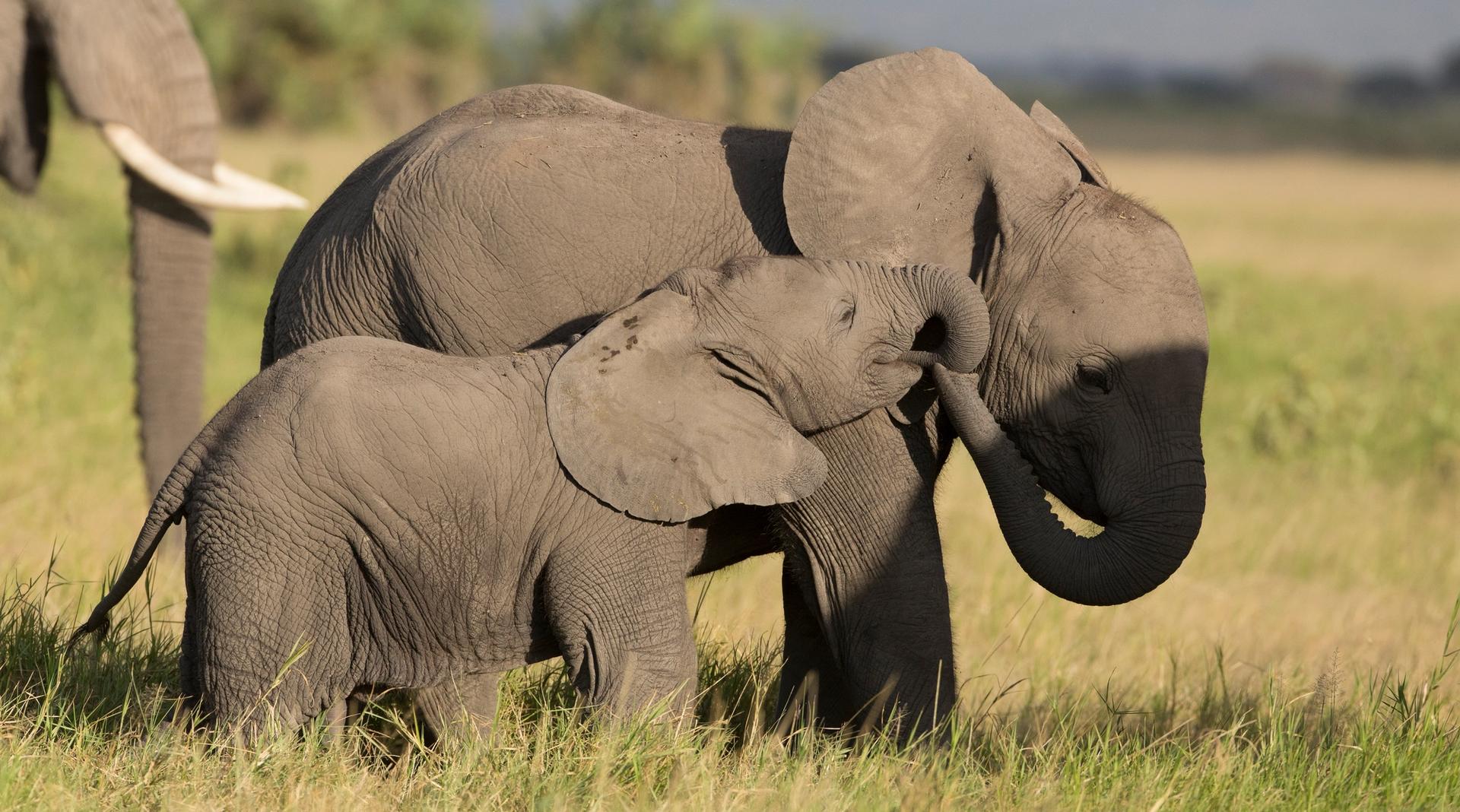
The trunk is the elephant’s most versatile tactile instrument. Elephants use their trunks to caress, reassure, guide, restrain, lift, assist, explore, and investigate. A mother may gently touch her calf to comfort or redirect it. Family members frequently investigate one another’s genitals, mouths, or temporal glands with their trunks, integrating tactile and chemical information. During moments of distress or excitement, elephants may reach toward companions with their trunks in apparent reassurance. In play, trunks push, pull, wrestle, and entwine. During aggression, the trunk may slap, block, or shove. During courtship and mating, the trunk is used to explore and control a partner’s movements, often in close coordination with visual and chemical cues.
Feet are also part of the tactile repertoire. An elephant may nudge another gently with a forefoot, kick during play or aggression, or touch the body of a deceased individual. Ears may be used to brush against another in a friendly gesture. The entire body may be used to push, ram, or lean against another elephant. Full-body contact may signal aggression, but it can also express affection or be a prelude to mating during courtship. Tactile communication is, therefore, not limited to the trunk but involves multiple anatomical structures and varying intensities of contact.
As with other forms of communication, The Elephant Ethogram provides a systematic way to explore tactile behaviors. Selecting “Tactile” under Communication Mode reveals a wide range of contact behaviors, including Allo-Check-Tusk, Bite-Trunk, Body-Nudge, Climb-Upon, Ear-Brush, Grasp-Tail, Kick-Back, Pushing, Reach-Over, Rest-Head, Social-Rubbing, Step-On, Tail-Swatting, Tusking, Touch-Carcass-with-Foot, and Touch-Carcass-with-Trunk. These examples illustrate the breadth of tactile interactions and the diversity of contexts in which they occur.
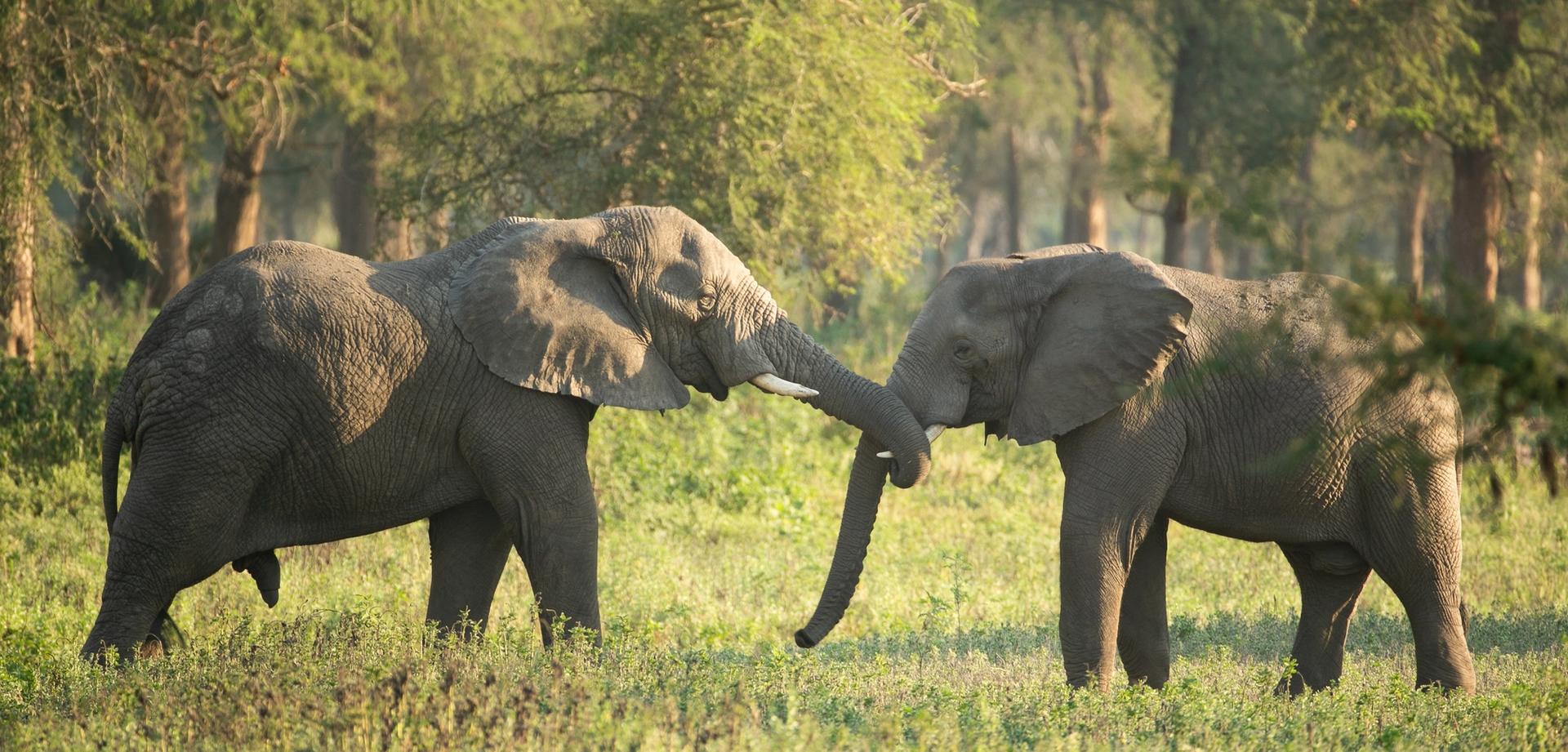
For tactile communication to function effectively, elephants must possess an exceptionally refined sense of touch. The anatomy of the trunk and the distribution of mechanoreceptors throughout the body reveal a sensory system highly adapted for delicate manipulation and vibration detection.
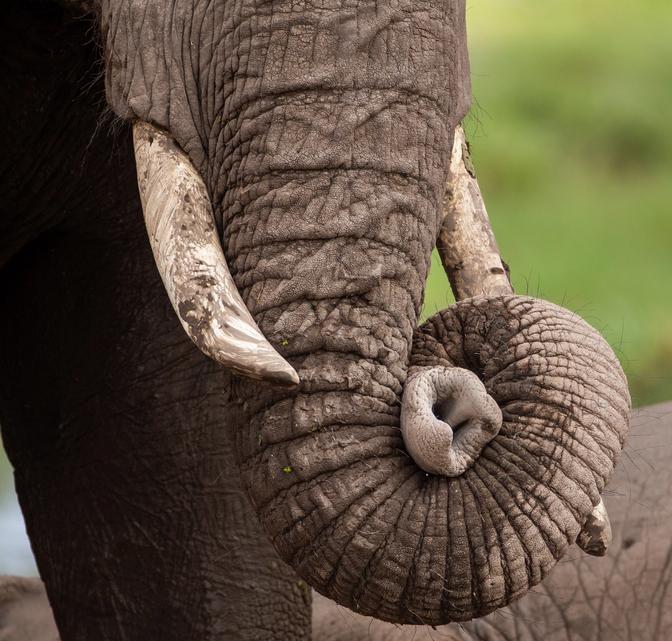
The elephant trunk is a fusion of nose and upper lip composed of tens of thousands of muscle units, allowing extraordinary flexibility and control. Its skin is richly innervated and packed with touch receptors, enabling elephants to distinguish fine textures and manipulate objects with remarkable precision.
Elephants are able to detect extremely small surface features with the trunk tip. Studies of trunk tactile sensitivity suggest that elephants can perceive ridges and surface irregularities only fractions of a millimeter in size, allowing them to discriminate subtle differences in texture. This sensitivity helps elephants assess social partners, evaluate food, identify objects, and explore their surroundings with great accuracy.
In addition to dense tactile innervation, the trunk is covered with whisker-like vibrissae that enhance sensitivity and help localize contact. These whiskers and their surrounding keratin structures appear specialized for tactile sensing, further increasing the trunk’s precision during exploration and manipulation. The trunk therefore serves simultaneously as a tactile, chemical, and motor organ, integrating sensory input with complex movement.
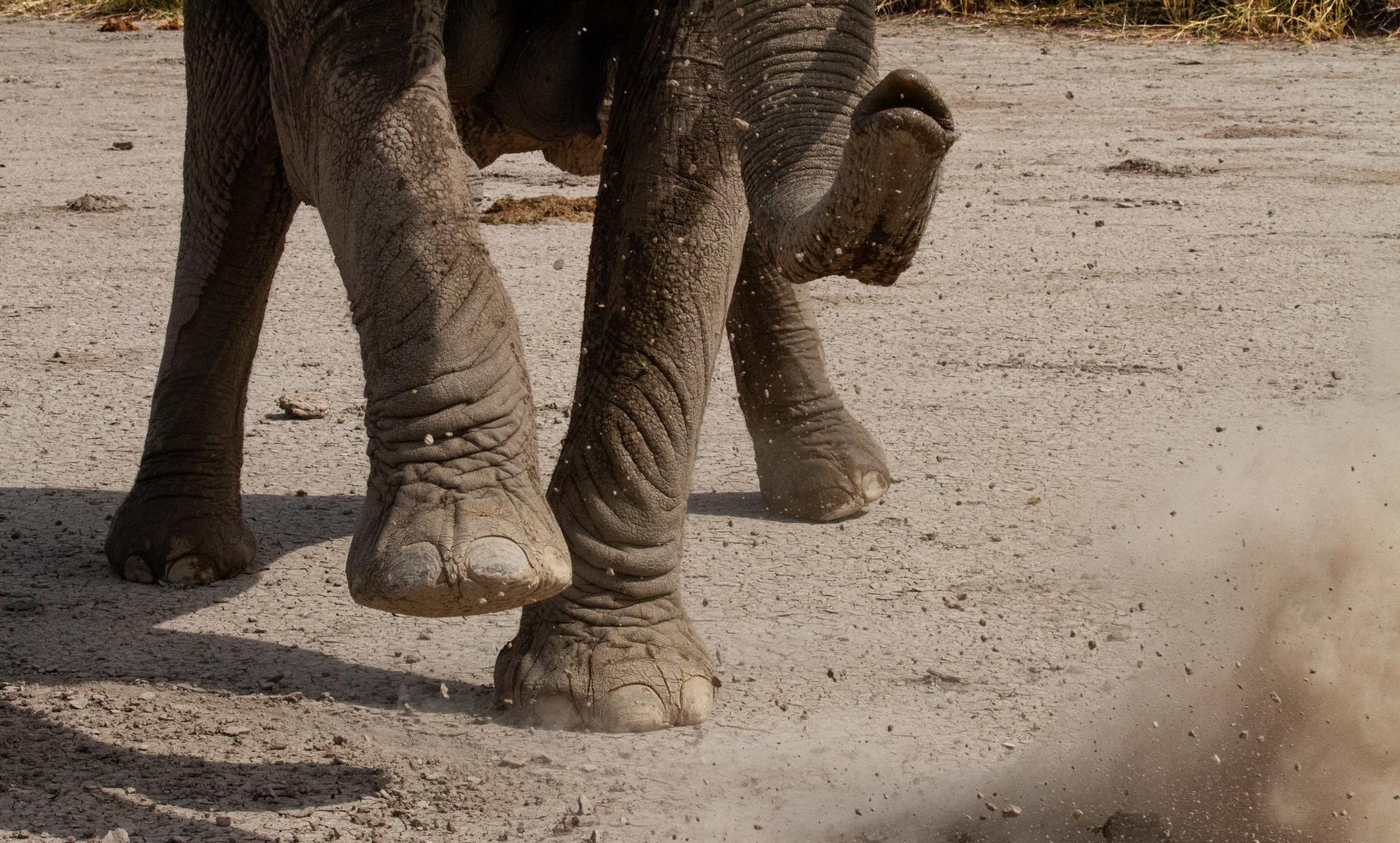
Elephants are masters of low-frequency communication. Much of their social interaction is mediated with deep rumbles whose most powerful frequencies often occur in the 10–40 Hz range - the same frequency band through which seismic energy travels most efficiently. When an elephant rumbles, a replica of the airborne sound also travels through the ground as a vibration.
Elephant rumbles move through air at around 309 meters per second and through the ground at roughly 240–270 meters per second, depending on soil type and moisture. This dual transmission allows elephants to communicate across considerable distances, using both sound waves in air and seismic waves in the earth.
Research led by Dr Caitlin O’Connell and colleagues first demonstrated that elephants can detect, interpret, and respond to these seismic cues, orienting toward their source and reacting appropriately. Elephants appear to perceive these seismic waves through two complementary pathways: bone conduction through the middle ear and vibration-sensitive mechanoreceptors in the feet and trunk.
Recent research shows that elephants detect not only natural seismic vibrations but also human-generated ground noise. A 2024 study by Dr Beth Mortimer and colleagues demonstrated that African elephants respond to vibrations from vehicles and machinery by freezing, listening, or retreating — clear evidence of risk-avoidance behaviour.
Our own long-term observations in Gorongosa National Park echo this sensitivity. Elephants consistently avoided roads and open areas where vehicle activity was frequent, even when immediate danger was minimal. Movement analyses later confirmed that elephants in the park shift their activity patterns near roads and settlements, using interior areas more during daylight hours.
These patterns likely reflect elephants’ sensitivity to both acoustic and seismic cues. The combined sound and ground vibrations associated with vehicles and human activity may reinforce elephants’ tendency to associate such cues with danger.
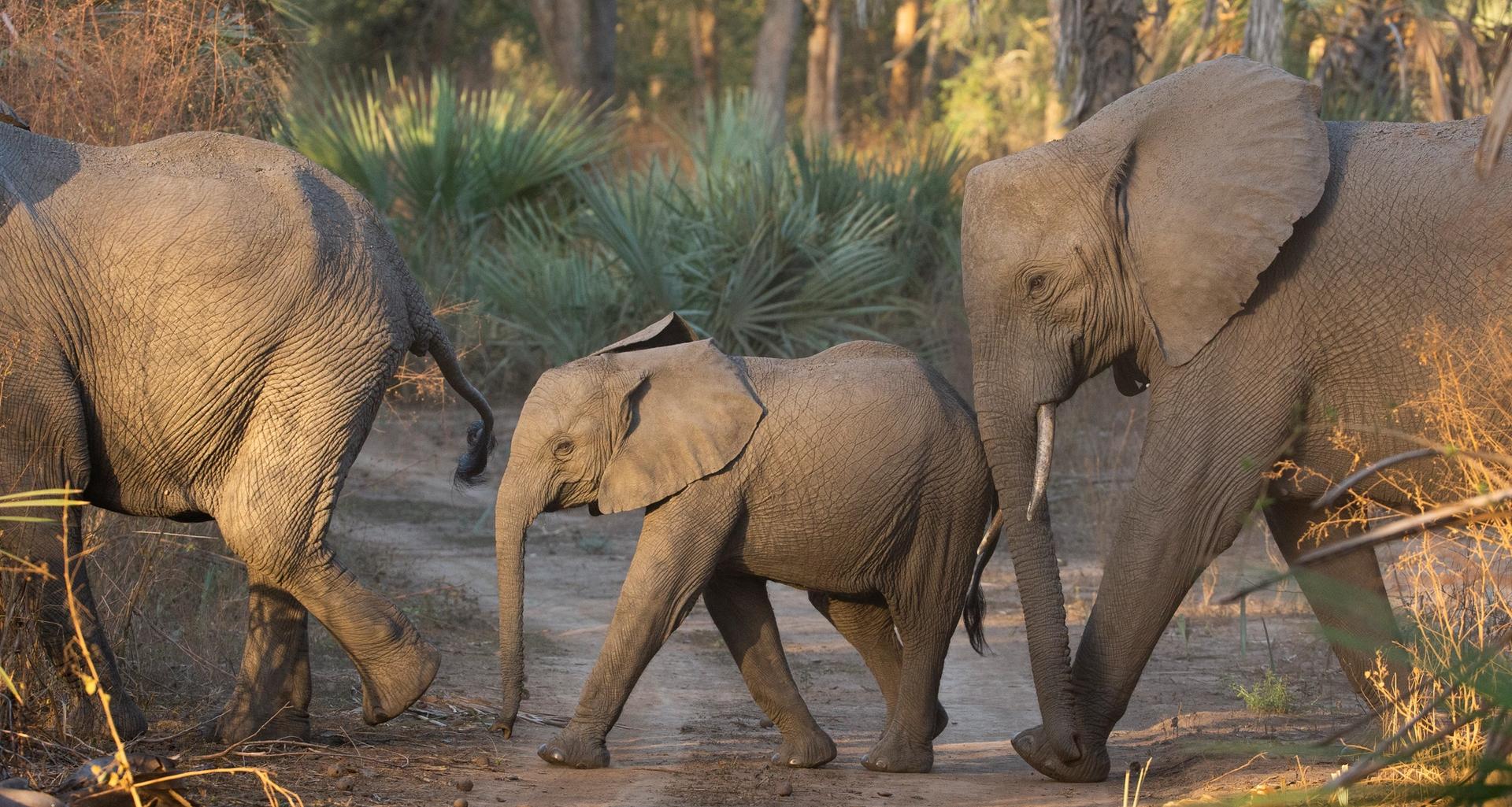
Touch rarely functions in isolation. A reassuring Caress may accompany a soft Coo-Rumble. Investigative Trunk-to-Genital contact often occurs simultaneously with chemical sampling. Tusking may be accompanied by loud roars by the receiver. As with chemical and visual communication, meaning emerges through the integration of multiple sensory channels.
Tactile interactions often accompany moments of social significance: births, reunions, distress, courtship, and death, suggesting that touch plays a role in processing socially salient events.
Bouley DM, Alarcón CN, Hildebrandt T, O’Connell-Rodwell CE. 2007. The distribution, density and three-dimensional histomorphology of Pacinian corpuscles in the foot of the Asian elephant (Elephas maximus) and their potential role in seismic communication. J Anat. 211:428–435. https://doi.org/10.1111/j.1469-7580.2007.00792.x
Deiringer N, de Jonge T, Kappel D, Fehr J, Mielke F, Heege S, Brecht M. 2023. The functional anatomy of elephant trunk whiskers. Commun Biol. 6:771. https://doi.org/10.1038/s42003-023-04945-5
Eleuteri V, Bates LA, Rendle-Worthington J, Hobaiter C, Stoeger AS. 2024. Multimodal communication and audience-directedness in the greeting behaviour of semi-captive African savannah elephants. Commun Biol. 7:472. https://doi.org/10.1038/s42003-024-06133-5
The largest video and audio library of elephant behaviors.